 |
 |
 |
 |
 |
 |
 |
 |
 |

 |
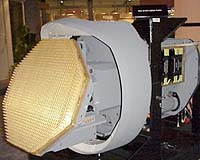
Raytheon To Provide Revolutionary AESA Capabilities To 135 F/A-18s
El Segundo CA (SPX) Jan 24, 2008 The U.S. Navy is retrofitting 135 Super Hornets with Raytheon's APG-79 active electronically scanned array radar. An initial contract worth nearly $55 million authorizes Raytheon to supply 19 AESA systems, spares and maintenance. This ensures Super Hornets manufactured before installation of the APG-79 will benefit from Raytheon's new advanced sensor technology. The APG-79 program is moving toward full-rate production in anticipation of delivering 415 systems plus spares to the Navy and 24 systems to the Royal Australian Air Force in coming years. "The retrofit program further enhances the Navy's airborne capabilities, ensuring our customer has game-changing sensor technology across the majority of its airborne assets," said Dr. Tom Kennedy, vice president for Raytheon's Tactical Airborne Systems business. "Our operational AESA radar delivers a range of advanced options including non-traditional intelligence, surveillance and reconnaissance, high-speed transfer of actionable information, unparalleled situational awareness, and targeting capabilities at greater ranges than ever." Two AESA-equipped fleet squadrons are training for deployment expected in 2008. They are the Black Lions of VFA-213 at Naval Air Station Oceana and the Fighting Redcocks of VFA-22 at Naval Air Station Lemoore. AESA-equipped Super Hornets are also being added to two training squadrons so aircrews can learn how best to maximize the advanced capabilities of the APG-79. "The APG-79 AESA radar is the key sensor in the flight plan for the Block II Super Hornets that will keep these aircraft dominant for decades," said Capt. Mark W. Darrah, F/A-18 and EA-18G Navy program manager. The APG-79 AESA radar provides our warfighters with sensor data that will revolutionize how we employ the F/A-18E/F block II and EA-18G platforms. The radar serves as the key enabling capability to field F/A-18/ and EA-18G flight plan elements. "From operational and maintenance viewpoints, we believe this new technology sets us apart and will give us the edge we need in the challenging battlespace in which we expect to operate well into the future." Community Email This Article Comment On This Article Related Links The latest in Military Technology for the 21st century at SpaceWar.com
 DRS Tech Gets Contract To Supply Marine Corps With Rugged Tablet Computers
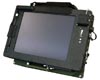 Parsippany NJ (SPX) Jul 10, 2007
DRS Technologies has received a $5 million award as part of a previous contract to provide military rugged tablet (MRT) computers and peripheral equipment for the U.S. Marine Corps' Target Location Designation Handoff System (TLDHS) program. DRS received the order from Stauder Technologies in St. Peters, Missouri. For this contract the company's DRS Tactical Systems business unit in Melbourne, Florida, will produce hundreds of the handheld MRT computers and peripheral equipment. |
|
|

| The content herein, unless otherwise known to be public domain, are Copyright 1995-2007 - SpaceDaily.AFP and UPI Wire Stories are copyright Agence France-Presse and United Press International. ESA Portal Reports are copyright European Space Agency. All NASA sourced material is public domain. Additional copyrights may apply in whole or part to other bona fide parties. Advertising does not imply endorsement,agreement or approval of any opinions, statements or information provided by SpaceDaily on any Web page published or hosted by SpaceDaily. Privacy Statement |