 |
 |
 |
 |
 |
 |
 |
 |
 |

 |
Northrop Grumman Mine Detection Systems Earns Go-Ahead
Melbourne FL (SPX) Mar 11, 2008 Northrop Grumman Airborne Laser Mine Detection System (ALMDS) has received approval for low-rate initial production (LRIP) Lot 2 from the U.S. Navy. The company will produce three ALMDS units for approximately $25 million under the contract. It is anticipated that the company will produce 25 units over the next five years when the program enters full rate production in 2010. There is also potential for international sales. Part of a larger group of products designed to detect or destroy mines in the sea, the littorals, on beachheads or on the ground, the Northrop Grumman ALMDS uses lasers to detect mines in the ocean at depths sufficient to protect ships. Mounted in an H-60 helicopter, an ALMDS unit is flown ahead of a convoy to determine if mines lie in the ships' path. Two units have already been delivered under LRIP Lot 1, and the Navy is performing operational tests on them. The units could be made available to the fleet if needed. "The purpose of the Northrop Grumman Airborne Mine Countermeasures products is to help give our customers assured access. ALMDS is a new, high-technology capability that not only helps assure access but also helps minimize a sailor's exposure to dangerous mine threats at sea -- 'keeping the sailor out of the minefield,'" said Bob Klein, vice president for Northrop Grumman's Maritime and Tactical Systems integrated product team (IPT). "Working closely with our customer Naval Sea Systems Command (PMS 495), the Naval Surface Warfare Center at Panama City, Fla., and our key suppliers, we finalized the software and exceeded all our key performance parameters, with a 50 percent increase in depth performance and 60 percent reduction in post-mission-analysis time," said Klein. "System performance is outstanding. This is a key milestone for the ALMDS program, and shows the system is mature and meets the LRIP 2 entry criteria. All key performance parameters were met or exceeded," said Gary Humes, lead of Naval Sea Systems Command. ALMDS was developed and is produced by Northrop Grumman at its Melbourne, Florida site. Key suppliers are: Arete Associates, Tucson, Ariz.; VMETRO, Houston; CPI Aero, Edgewood, N.Y.; CEO, St. Charles, Mo.; and, Meggitt Defense Systems, Inc., Irvine, Calif. There are three other products in Northrop Grumman's portfolio of airborne mine countermeasures products. The company is ground testing the Navy's Rapid Airborne Mine Clearance System. It was developed to destroy floating or submerged mines by striking them with a specialized round fired from a 30 mm cannon mounted on an MH-60S helicopter. The Coastal Battlefield Reconnaissance and Analysis system, which is being developed for the Marine Corps, also is in flight testing and is designed to be flown aboard a Northrop Grumman Fire Scout unmanned air vehicle (UAV) to detect surface mines and other obstacles on the beachhead. The Airborne Standoff Minefield Detection System (ASTAMIDS) is a U.S. Army program. ASTAMIDS uses an integrated airborne sensor suite, also mounted on a Fire Scout UAV, to detect and locate recently buried, scattered or surface-laid mines and obstacles on the battlefield. "ALMDS and our other airborne mine countermeasures products represent a huge technological step towards a long-sought goal: keeping the sailors, soldiers and Marines out of the minefield," said Klein. Community Email This Article Comment On This Article Related Links Naval Warfare in the 21st Century
 Steps Towards Warship Invisibility
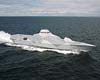 London, UK (SPX) Mar 05, 2008
Naval warships might look like all-powerful vessels but they are also highly vulnerable to being spotted by the enemy. |
|
|

| The content herein, unless otherwise known to be public domain, are Copyright 1995-2007 - SpaceDaily.AFP and UPI Wire Stories are copyright Agence France-Presse and United Press International. ESA Portal Reports are copyright European Space Agency. All NASA sourced material is public domain. Additional copyrights may apply in whole or part to other bona fide parties. Advertising does not imply endorsement,agreement or approval of any opinions, statements or information provided by SpaceDaily on any Web page published or hosted by SpaceDaily. Privacy Statement |