
 |
 |
 |
 |
 |
 |
 |
 |
 |

 |
Northrop Grumman Completes Testing Of New B-2 Bomber Radar
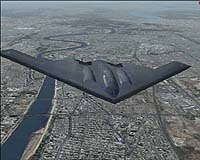
Palmdale CA (SPX) Jul 24, 2008 Northrop Grumman has successfully completed a battery of tests designed to prove that new radar units developed for the U.S. Air Force's B-2 Radar Modernization Program (RMP) will perform properly under all environmental conditions the aircraft is likely to experience. Northrop Grumman is the Air Force's prime contractor for the B-2 stealth bomber, the flagship of the nation's long range strike arsenal. Known as environmental qualification testing, the test program "exercised" the radar units -- an antenna, a power supply and a receiver/exciter module -- in a laboratory environment under extreme conditions of temperature, altitude, humidity, shock and vibration. It was conducted in collaboration with Raytheon Space and Airborne Systems, El Segundo, Calif., who developed the units under contract to Northrop Grumman. "The completion of environmental qualification testing on schedule is a significant risk reduction milestone for the program," said John Buzby, director of the radar modernization program for Northrop Grumman's Integrated Systems sector. "It proves that the radar units are suitable for use in the operational B-2 flight environment." According to Buzby, the qualification testing, which was conducted as part of the RMP system development and demonstration phase, also demonstrated the integrity of the new antenna's design. The environmental testing is one of several activities Northrop Grumman has used to demonstrate the maturity and reliability of the radar units before beginning an RMP production program. The company has also been flight testing production-representative RMP units since January 2008 to demonstrate that they meet their operational radar performance requirements. The B-2 Spirit stealth bomber is one of the most survivable aircraft in the world. It remains the only long-range, large-payload aircraft that can penetrate deeply into protected airspace. In concert with the Air Force's air superiority fleet, which provides airspace control, and the Air Force's tanker fleet, which enables global mobility, the B-2 helps ensure an effective U.S. response to threats anywhere in the world. It can fly more than 6,000 nautical miles unrefueled and more than 10,000 nautical miles with just one aerial refueling, giving it the ability to reach any point on the globe within hours. Community Email This Article Comment On This Article Share This Article With Planet Earth
Related Links The latest in Military Technology for the 21st century at SpaceWar.com
 Thompson Files: Why USAF needs F-22 Raptor
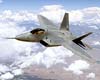 Arlington, Va. (UPI) Jul 22, 2008
 This summer marks the 10th anniversary of a powerful metaphor for the decline of U.S. air power. |
|
|

| The content herein, unless otherwise known to be public domain, are Copyright 1995-2007 - SpaceDaily.AFP and UPI Wire Stories are copyright Agence France-Presse and United Press International. ESA Portal Reports are copyright European Space Agency. All NASA sourced material is public domain. Additional copyrights may apply in whole or part to other bona fide parties. Advertising does not imply endorsement,agreement or approval of any opinions, statements or information provided by SpaceDaily on any Web page published or hosted by SpaceDaily. Privacy Statement |
 del.icio.us
 Digg
Digg Reddit
 YahooMyWeb
 Google
 Facebook