
 |
 |
 |
 |
 |
 |
 |
 |
 |

 |
NASA Radar On Indian Lunar Satellite Looks Deep Inside Shadowed Craters
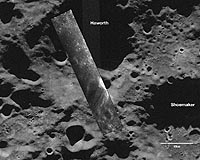
Laurel MD (SPX) Jan 19, 2009 Using a NASA radar flying aboard India's Chandrayaan-1 spacecraft, scientists are getting their first look inside the moon's coldest, darkest craters. The Mini-SAR instrument, a lightweight, synthetic aperture radar, has passed its initial in-flight tests and sent back its first data. The images show the floors of permanently-shadowed polar craters on the moon that aren't visible from Earth. Scientists are using the instrument to map and search the insides of the craters for water ice. "The only way to explore such areas is to use an orbital imaging radar such as Mini-SAR," said Benjamin Bussey, deputy principal investigator for Mini-SAR, from the Johns Hopkins University Applied Physics Laboratory in Laurel, Md. "This is an exciting first step for the team which has worked diligently for more than three years to get to this point." The images, taken on Nov. 17, 2008, cover part of the Haworth crater at the moon's south pole and the western rim of Seares crater, an impact feature near the north pole. Bright areas in each image represent either surface roughness or slopes pointing toward the spacecraft. Further data collection by Mini-SAR and analysis will help scientists to determine if buried ice deposits exist in the permanently shadowed craters near the moon's poles. "During the next few months we expect to have a fully calibrated and operational instrument collecting valuable science data at the moon," said Jason Crusan, program executive for the Mini-RF Program for NASA's Space Operations Mission Directorate in Washington. Mini-SAR is one of 11 instruments on the Indian Space Research Organization's Chandrayaan-1 and one of two NASA-sponsored contributions to its international payload. The other is the Moon Mineralogy Mapper, a state-of-the-art imaging spectrometer that will provide the first map of the entire lunar surface at high spatial and spectral resolution. Data from the two NASA instruments will contribute to the agency's increased understanding of the lunar environment as it implements America's space exploration plan, which calls for robotic and human missions to the moon. Chandrayaan-1 launched from India's Satish Dhawan Space Center on Oct. 21 and began orbiting the moon Nov. 8. The Applied Physics Laboratory performed the final integration and testing on Mini-SAR. It was developed and built by the Naval Air Warfare Center and several other commercial and government contributors. The Applied Physics Laboratory's Satellite Communications Facility is Chandrayaan-1's primary ground station in the Western Hemisphere. Share This Article With Planet Earth
Related Links NASA's Mini-SAR Moon Mineralogy Mapper Chandrayaan-1 Mars News and Information at MarsDaily.com Lunar Dreams and more
 ISRO Begins Work On Chandrayaan-II Project
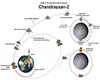 Chennai, India (PTI) Jan 19, 2009
ISRO has begun working on the Rs 425-crore second unmanned moon mission to be launched by early 2012 following the success of Chandrayaan-I, a top ISRO official said here on Saturday. |
|
|

| The content herein, unless otherwise known to be public domain, are Copyright 1995-2007 - SpaceDaily.AFP and UPI Wire Stories are copyright Agence France-Presse and United Press International. ESA Portal Reports are copyright European Space Agency. All NASA sourced material is public domain. Additional copyrights may apply in whole or part to other bona fide parties. Advertising does not imply endorsement,agreement or approval of any opinions, statements or information provided by SpaceDaily on any Web page published or hosted by SpaceDaily. Privacy Statement |
 del.icio.us
 Digg
Digg Reddit
 YahooMyWeb
 Google
 Facebook