
 |
 |
 |
 |
 |
 |
 |
 |
 |

 |
Cassini Radar Peers Through Haze Of Saturn Moon Titan
Pasadena CA (JPL) May 14, 2008 Cassini completed a successful flyby of Titan on May 12, at an altitude of 1,000 kilometers (620 miles), for the first of two Titan northern hemisphere flybys that will wrap up the original four-year mission. On this flyby, Cassini's radar instrument mapped the bright region of Xanadu, which was only partly imaged previously. This overlap in coverage may yield stereo views of the region. The radar team targeted Hotei Arcus, as well as a possible cryovolcanic feature, Tortola Facula (informally known as the "Snail"), which was visible in infrared images. Community Email This Article Comment On This Article Share This Article With Planet Earth
Related Links Explore The Ring World of Saturn and her moons Jupiter and its Moons The million outer planets of a star called Sol News Flash at Mercury
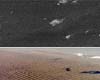
 Titan's Smoggy Sand Grains
 Pasadena CA (SPX) May 05, 2008
Titan and Earth have much in common, but not when it comes to sand. On Earth, sand grains form by breaking things down, but on Titan, the opposite may be true - with much of the sand a product of building things up. That's one theory Cassini scientists are considering after studying Titan's massive sand dunes with the visible and infrared mapping spectrometer on the Cassini Saturn orbiter. |
|
|

| The content herein, unless otherwise known to be public domain, are Copyright 1995-2007 - SpaceDaily.AFP and UPI Wire Stories are copyright Agence France-Presse and United Press International. ESA Portal Reports are copyright European Space Agency. All NASA sourced material is public domain. Additional copyrights may apply in whole or part to other bona fide parties. Advertising does not imply endorsement,agreement or approval of any opinions, statements or information provided by SpaceDaily on any Web page published or hosted by SpaceDaily. Privacy Statement |
 del.icio.us
 Digg
Digg Reddit
 YahooMyWeb
 Google
 Facebook