
 |
 |
 |
 |
 |
 |
 |
 |
 |

 |
Australia Sees Successful Upgrades To FA-18 Hornet Capability
Canberra, Australia (SPX) Jul 01, 2008 Minister for Defence, the Hon Joel Fitzgibbon MP has announced that Australia's air capability has been further enhanced by the successful trialling of a new radar warning receiver and acceptance by Air Force of the Joint Direct Attack Munition (JDAM) 'Smart Bomb'. The first production configured F/A-18 Hornet fitted with a new Radar Warning Receiver has successfully flown at RAAF Williamtown, only 18 months after the decision to acquire the equipment. As part of the Hornet upgrade program, Australia's fleet of F/A-18 aircraft are being fitted with upgraded Radar Warning Receivers, countermeasures systems and radar jamming systems. Earlier this year the Royal Australian Air Force accepted the Operational and Technical Airworthiness of the JDAM 'smart-bomb' on F/A-18A/B fighter aircraft. The JDAM 'smart-bomb' provides RAAF F/A-18A/B fighters with a state-of-the-art weapon capability, allowing them to accurately employ air-to-ground weapons during day or night and in all weather conditions through the use of Global Positioning System (GPS) technology. "These upgrades to the F/A-18 Hornet will provide the Royal Australian Air Force with leading-edge technology, ensuring the Hornet's continued ability to operate as Australia's frontline fighter aircraft," Mr Fitzgibbon said. "The JDAM 'smart-bomb' will provide the Air Force with greatly improved accuracy and weapon effectiveness, reducing the likelihood of collateral damage during offensive operations. "The upgrade to the Hornet's Radar Warning Receiver is a significant achievement for the Defence Materiel Organisation as it has only been 18 months since the Raytheon ALR-67(V)3 Radar Warning Receiver was approved as part of the Hornet's Electronic Warfare Self Protection upgrade." During the 18 months since approval, the project acquired the Radar Warning Systems, completed the design, integration and testing required to install and operate the new system on the Hornet. The project is within budget and on-track to deliver the complete electronic warfare self protection upgrade to the entire Hornet fleet by late 2012. "Given the complexity of the project, the ability to deliver within schedule and budget has been a big success for the Defence Materiel Organisation," Mr Fitzgibbon said. Community Email This Article Comment On This Article Share This Article With Planet Earth
Related Links The latest in Military Technology for the 21st century at SpaceWar.com
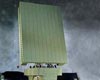
 US Marines, Northrop Grumman Team Complete G/ATOR Preliminary Design Review
 Baltimore MD (SPX) Jul 01, 2008
The U.S. Marine Corps' new Ground/Air Task Oriented Radar (G/ATOR) moved an important step closer to production with the successful conclusion of the formal Preliminary Design Review (PDR) at Northrop Grumman's Electronic Systems sector headquarters. |
|
|

| The content herein, unless otherwise known to be public domain, are Copyright 1995-2007 - SpaceDaily.AFP and UPI Wire Stories are copyright Agence France-Presse and United Press International. ESA Portal Reports are copyright European Space Agency. All NASA sourced material is public domain. Additional copyrights may apply in whole or part to other bona fide parties. Advertising does not imply endorsement,agreement or approval of any opinions, statements or information provided by SpaceDaily on any Web page published or hosted by SpaceDaily. Privacy Statement |

 del.icio.us
 Digg
Digg Reddit
 YahooMyWeb
 Google
 Facebook