
 |
 |
 |
 |
 |
 |
 |
 |
 |

 |
AESA And Other Developments Drive Radar Production
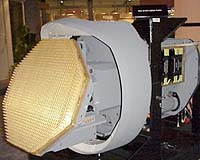
Newtown CT (SPX) Oct 31, 2008 Forecast International projects the worldwide radar market to be worth $50 billion over the 2008-2017 timeframe. In "The Market for Radar Systems" analysis, the production, operations and maintenance, and RDT and E programs of 113 radar systems are covered. Over the next 10 years, the study projects 13,325 individual radar units will be produced. Advancements in technology are driving demand for new radar systems around the world. "Advancements in digital and electronic technology are further improving radar capabilities," said William Ostrove, electronics analyst and author of the study. The latest advancements, such as Active Electronically Scanned Array (AESA), are appealing to the most advanced militaries around the world. The U.S. military's latest fighter aircraft, such as the F/A-18E/F, F-22, and F-35, all include AESA radars. Military buyers are increasingly seeking AESA radars for retrofit as well as for new-build programs. "Many radar manufacturers believe there is a large market for retrofitting AESA radars on older in-service aircraft," said Ostrove. "The U.S. Air Force's decision to upgrade its aging F-15s with AESA radars could be the first in a growing trend." The study cites Raytheon's and Northrop Grumman's introduction of small, scalable AESA radars as evidence that manufacturers see a large market for radar upgrades. Increased levels of production have allowed economies of scale to take place, lowering costs and increasing appeal. What was once reserved for only the richest and most powerful militaries is finding its way across the globe. The United Arab Emirates demanded an AESA variant of the APG-68 be included with its recently purchased F-16E/Fs. India also has asked for AESA radars to be included in its upcoming Medium Multi-Role Combat Aircraft (MMRCA) fighter competition. Russia, Israel, and some European countries are working on AESA radars to compete with U.S. offerings. The study points to other recent developments that are driving radar production as well. Miniaturization and reduced costs have made Airborne Early Warning and Control (AEW and C) radars more appealing to countries with smaller defense budgets, such as South Korea, Turkey, and Pakistan. New technology has also made it possible to combine functions that were previously performed by multiple radars into a single unit. The Ground/Air Task Oriented Radar (G/ATOR), which will replace the TPS-63, MPQ-62, TPS-73/79, and TPQ-46A with a single system in U.S. Marine Corps service, is one example, according to Ostrove. Despite an overall projected decline in the radar market over the next 10 years, the radar industry continues to be worth an enormous amount of money. The major players, such as Raytheon and Northrop Grumman continue to top Forecast International's list of top five radar producers. Other companies that join them on that list include the MEADS International consortium, Israel Aerospace Industries, and Rockwell Collins. Consortiums, such as MEADS International and Euroradar, continue to play an important role in the radar industry. Community Email This Article Comment On This Article Share This Article With Planet Earth
Related Links Forecast International The latest in Military Technology for the 21st century at SpaceWar.com
 Caiman design deflects IEDs in Iraq
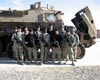 Yethrib, Iraq (UPI) Oct 30, 2008
 The 38,000-pound Caiman armored vehicles stopped at the fringe of this rural village and disgorged a group of U.S. soldiers and Iraqi police. Their mission: seek out and detain a half-dozen men wanted by the Iraqi government for terrorism-related offenses. |
|
|

| The content herein, unless otherwise known to be public domain, are Copyright 1995-2007 - SpaceDaily.AFP and UPI Wire Stories are copyright Agence France-Presse and United Press International. ESA Portal Reports are copyright European Space Agency. All NASA sourced material is public domain. Additional copyrights may apply in whole or part to other bona fide parties. Advertising does not imply endorsement,agreement or approval of any opinions, statements or information provided by SpaceDaily on any Web page published or hosted by SpaceDaily. Privacy Statement |
 del.icio.us
 Digg
Digg Reddit
 YahooMyWeb
 Google
 Facebook